Advertisement
Let’s talk about Rajesh.
It’s 3:17 AM on a Tuesday, and Rajesh is jolted awake by his phone. It’s the call every transport owner dreads.
“Sir, the truck… it’s on the side of the highway near Udaipur. The engine just… stopped.”
Rajesh’s heart sinks. That truck—a 7-year-old model he bought “at a good price”—is carrying a high-priority shipment for his biggest client.
The cascade of failures begins.
- The client is furious, threatening penalties.
- The driver is stranded, 800 km from home.
- A replacement truck has to be dispatched, burning double the fuel.
- The “good price” truck is now facing a ₹2,00,000 repair bill.
That 3 AM call isn’t just about a breakdown. It’s a catastrophic profit leak.
Rajesh is running a logistics business, but he feels like he’s running a fire department. He’s trapped by rising diesel prices, a critical shortage of good drivers, and old assets that are bleeding him dry.
This article is for Rajesh. It’s for every fleet owner and transport manager in India who knows that in 2025, you aren’t just buying a “truck.” You’re making a ₹40-lakh business decision.
The game has changed. The old way—”buy it cheap, run it into the ground”—is a recipe for bankruptcy.
The new game is about Total Cost of Ownership (TCO), driver retention, and 100% uptime. And in this new game, Tata heavy-duty trucks have transformed from simple machines into sophisticated, data-driven business solutions.
We’re going to do a deep dive into the best Tata models for long-route transport in 2025. This isn’t just a spec sheet. This is a guide to buying your next profit-maker.
The “Three-Headed Dragon” Killing Your Profits (And Why Your Old Truck Can’t Fight It)
Before we look at new models, let’s name the enemy. Every long-haul transport business in 2025 is fighting a three-headed dragon.
- The Fuel-Cost Monster: Diesel prices are unpredictable and high. Your entire business lives and dies by “KMPL” (Kilometers Per Litre). A 5% improvement in mileage isn’t a “small win”; it’s a massive, bottom-line-altering victory.
- The Downtime Demon: This is Rajesh’s 3 AM call. An idle truck is a black hole for money. It’s not just repair costs; it’s lost contracts, client penalties, and a damaged reputation.
- The Driver Churn Crisis: This is the new killer. Good, reliable drivers are gold. And they will not stay in a hot, uncomfortable, rattling cabin for 14-day routes. A “bad office” (a non-AC, uncomfortable truck) means you’re constantly training new, inexperienced drivers—which means more accidents and lower mileage.
The 2025 lineup of Tata heavy commercial vehicles (HCVs) is built from the ground up to fight this dragon. They are engineered around a philosophy Tata calls the “Power of 6″—performance, profitability, comfort, convenience, connectivity, and peace of mind.
Let’s see what that actually means for your money.
The Main Event: 2025 Tractor-Trailer Kings for Long Haul
For the biggest jobs—hauling 30, 40, or 50 tonnes across the country—you need a tractor-trailer. This is the 55,000 kg GCW (Gross Combination Weight) category. In the Tata universe, this is a two-horse race: The Workhorse King vs. The Flagship Performer.
H2: The Profit Workhorse: Tata Signa 5530.S
Think of the Tata Signa 5530.S as your most reliable, no-nonsense manager. It shows up every single day, does the job with maximum efficiency, and is built purely for profitability.
This is the logical, “head-first” choice for a fleet owner who obsesses over TCO.
Why It’s a Profit-Maker:
- The “Unbeatable” Engine: It’s powered by the legendary Cummins ISBe 6.7L engine (300 HP, 1100 Nm torque). This engine is a “tried-and-tested” icon in the Indian transport industry. It’s the definition of reliable.
- The “KMPL” Coach: This is where it gets smart. The truck actively helps your driver save fuel. It comes with a Gear Shift Advisor (a small light telling the driver the perfect moment to shift) and 3-Mode Fuel Economy Switching (Light, Medium, Heavy) that optimizes engine power to the load.
- Built for Uptime: The Signa’s engineering is robust. It’s designed for long service intervals, meaning less time in the workshop and more time on the road. The chassis and suspension are built to handle the unpredictable nature of Indian highways.
The Cabin: The “Good Enough” Office The Signa cabin is a massive upgrade from trucks of 5-10 years ago. It’s ergonomic, has a comfortable sleeper bunk, and is designed to reduce driver fatigue. However, it’s built for function first. An AC is optional, but highly recommended.
Who should buy the Signa 5530.S? The fleet owner whose #1 priority is the lowest Total Cost of Ownership and the highest possible “KMPL.” You are a numbers-driven operator, and this truck gives you the best numbers.
The Flagship Performer: Tata Prima 5530.S
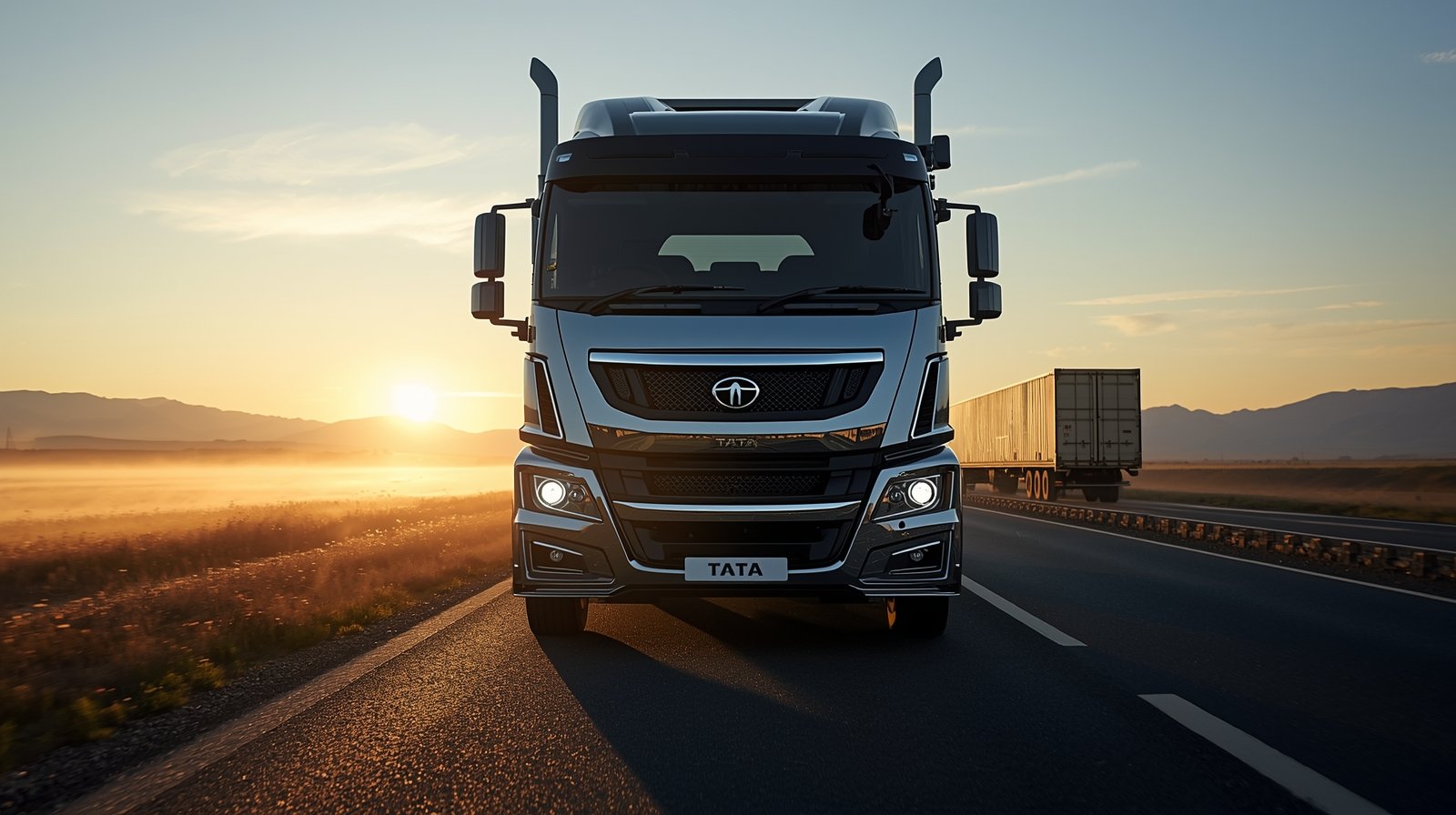
The Tata Prima 5530.S is the “Star Performer.” It has the same powerful 300 HP Cummins engine and 55,000 kg GCW as the Signa. The difference isn’t in the power; it’s in the experience.
This is the truck you buy to solve the “Driver Churn Crisis.” This is the truck that a 10-year-veteran driver asks for.
Why It’s a Driver-Retention Machine:
- A “World-Class” Cabin: This is the Prima’s knockout punch. The cabin isn’t just a “cabin”; it’s a “cockpit.” It’s a fully air-conditioned, world-class sleeper cabin designed in Europe.
- It’s a “Home on the Road”: For a driver on a 10-day trip from Delhi to Chennai, this matters. The Prima features an adjustable captain’s chair (often with air suspension), a wider and more comfortable sleeper bunk, and ergonomic, car-like controls.
- Safer, Smarter: The Prima often comes with more advanced safety and tech features, like ADAS (Advanced Driver-Assistance Systems), including lane departure warnings. A comfortable, less-fatigued driver is a safer driver.
Is the Prima “Worth” the Extra Cost? Let’s ask Rajesh. His best driver just left for a competitor who gave him a Prima. Now Rajesh has to trust his ₹40-lakh truck and ₹20-lakh cargo to a new, unproven driver. How much is that “driver retention” worth?
A happy, respected driver stays. They treat the truck better. They drive more safely. They get better mileage. The Prima pays for itself by attracting and keeping the best talent.
Who should buy the Prima 5530.S? The “visionary” fleet owner who understands that investing in the driver is investing in the business. You’re running premium routes, have high-value clients, and cannot afford the risk of high driver turnover.
Beyond Tractors: The Rigid “Backbone” of Long Haul
Not all long-route transport uses trailers. For fixed loads like cement, steel, tankers, or market loads, you need a multi-axle rigid truck.
The Rigid Haulage Champion: Tata Signa 4825.T / LPT 4825
This is the 16-wheeler (or 10×2) “king of the highway.”
This 47.5-tonne GVW truck is the undisputed workhorse for heavy, fixed-load applications. Its key feature is the pusher lift axle or tag axle.
- Analogy: Think of it as a “part-time” set of wheels.
- How it works: When the truck is fully loaded, all axles are down on the road to distribute the weight legally and provide stability. When the truck is empty or partially loaded, the driver can lift that extra axle off the ground.
- The Benefit: This saves massive amounts of money on tire wear (fewer tires on the road) and improves fuel efficiency (less rolling resistance). It’s a TCO-crushing feature.
Powered by the same reliable Cummins 250 HP engine, the Signa 4825.T is the “set it and forget it” choice for bulk carriers who need maximum reliability and efficiency on long, predictable routes.
The E-Commerce Express: The Tata Ultra T.19 / T.21
“Long route” in 2025 doesn’t just mean 50-tonne loads. It means the e-commerce and parcel boom. This is the “hub-and-spoke” model, where goods travel hundreds of kilometers overnight from a warehouse (hub) to a city (spoke).
This is where the Tata Ultra T.19 (18.5-tonne GVW) shines.
Think of the Ultra cabin as a “baby Prima.” It’s a narrow, comfortable, car-like cabin that is perfect for this segment.
- Why it wins: It’s designed for fast, “just-in-time” logistics.
- The Driver Benefit: Drivers love it. It’s easy to maneuver in cities but has the comfort and power (from the 5L “Turbotronn” engine) to cruise on the highway all night.
For any logistics business in e-commerce, pharmaceuticals, or high-value parcel delivery, the Ultra is the smart, modern choice.
The “Digital Co-Pilot” That Solves the 3 AM Call
This is the single biggest change in 2025. Your truck is no longer “offline.” All new Tata HCVs come with Tata Motors Fleet Edge—a powerful, factory-fitted telematics system.
This isn’t just a “GPS tracker.” It’s your digital business partner. It’s the “co-pilot” sitting next to your driver, 24/7, reporting directly to you.
Here’s what actually solves Rajesh’s problems:
- It Fights Fuel Theft: Fleet Edge provides real-time fuel monitoring and fuel loss alerts. You get an instant SMS if there’s a sudden drop in the fuel tank at an unauthorized location. This one feature can save you lakhs per year.
- It Creates Better Drivers: It generates a Driver Behaviour Scorecard. You can see who is braking harshly, over-speeding, or idling the engine (and wasting fuel) for too long. You can then coach these drivers, improving safety and KMPL.
- It Prevents the 3 AM Breakdown: This is the magic. Fleet Edge has Prognostics. The truck monitors its own “health” (engine oil, DEF, coolant). It will send you an alert before a part fails. You get a message: “High Coolant Temp warning. Service needed.” You can schedule maintenance before the truck breaks down on a highway.
This system, “Fleet Edge,” is the answer to the Downtime Demon. It’s the peace of mind you’re paying for.
“This Sounds Expensive…” – The Real Truth About TCO in 2025
I know what you’re thinking. “A new 2025 Prima with all this tech sounds expensive. My 7-year-old truck is paid for.”
This is the “old mindset” trap. Your old truck isn’t free; it’s just costing you money in a different, more painful way.
Let’s look at the Total Cost of Ownership (TCO).
TCO = Initial Price + (Fuel Costs) + (Maintenance Costs) + (Driver Costs) - (Resale Value)
This is how a 2025 Tata truck wins:
- Initial Price: Yes, it’s higher. But with Tata Motors Finance, the EMI is manageable and structured for your business.
- Fuel Costs: This is a massive win. The new BS6 Phase 2 engines, combined with driver-coaching tech (Gear Shift Advisor) and Fleet Edge (idling alerts), are 5-10% more fuel-efficient than your old truck. Over 5 years, this saving alone can be several lakhs.
- Maintenance Costs: Your old truck is a maintenance-eater. The new Signa/Prima has long service intervals (e.g., 80,000+ km oil change) and a 6-year/6-lakh-km warranty. You have predictable, low costs.
- Driver Costs: The Prima reduces your driver costs by stopping them from leaving. No more hiring bonuses, no more training new drivers, no more accidents from inexperience.
- Resale Value: A 5-year-old, well-maintained Prima or Signa has one of the highest resale values in the entire market. You get a huge chunk of your investment back.
When you do the 5-year math, the “expensive” 2025 truck is dramatically cheaper to own and operate than your “paid-for” 2018 model.
Your Top 3 Questions Answered
- “Signa vs. Prima: Just tell me which one to buy.”
- Buy the Signa 5530.S if your main concern is the absolute best KMPL and lowest operating cost, and you have a stable set of drivers.
- Buy the Prima 5530.S if you are struggling with driver retention, run premium routes, and want to build a “prestige” brand that attracts the best talent.
- “What about service? My truck is on a long route.” This is Tata’s ace. They have the largest service network in India. With “Tata Sampoorna Seva,” you are never far from a workshop. They guarantee uptime and fast service, which is critical for long-haul.
- “Are these BS6 Phase 2 engines reliable?” Yes. The Cummins 6.7L engine is one of the most proven diesel engines on the planet. The BS6 tech (like the Diesel Particulate Filter) is now mature and reliable. It’s designed to be more efficient and cleaner for your benefit, not just for regulations.
Conclusion: Stop Buying Trucks. Start Buying “Peace of Mind.”
Let’s go back to Rajesh, sleepless at 3 AM. His problem isn’t a broken engine. His problem is risk. His old truck is a liability.
A 2025 Tata heavy-duty truck—whether it’s the profit-focused Signa 5530.S or the driver-focused Prima 5530.S—is not just a pile of steel.
It’s a business solution.
It’s a “KMPL-maximizer.” It’s a “driver-retention-tool.” And with Fleet Edge, it’s a 24/7 “uptime-guarantee.”
You’re not just buying a truck. You’re buying an answer to rising fuel costs. You’re buying a solution to the driver shortage.
You’re buying the ability to sleep soundly through the night.
Ready to Stop Leaking Profit?
Your old truck is costing you more than you think. Don’t guess—know your numbers.
As commercial vehicle experts, we’re offering a Free, No-Obligation Total Cost of Ownership (TCO) Audit.
Let us compare your current truck’s running costs (fuel, maintenance, downtime) with a brand new 2025 Tata Signa or Prima. We’ll show you exactly how many lakhs you could be saving per year, per truck.