Advertisement
Premium Travel is Here: Unpacking the Tata Winger Plus Launch & What It Signals for Your Fleet
Let’s talk about Rajesh.
Rajesh runs a successful tour agency in Jaipur. He’s built his business from scratch, and for 15 years, his fleet of “go-anywhere” tourist vans has been his pride. They are reliable. They are workhorses. They’ve shuttled thousands of tourists around the Golden Triangle.
But last Tuesday, Rajesh got a 1-star review that felt like a punch to the gut.
The review wasn’t about his driver (who was “polite and safe”). It wasn’t about the itinerary. It was about the vehicle.
“We paid for a ‘premium’ tour,” the review said, “but the van was old and incredibly bumpy. The AC barely reached the back row, and my family was cramped for 5 hours. It felt less like a private tour and more like a public bus. Not the ‘Incredible India’ experience we were promised.”
Rajesh is frustrated. He’s stuck.
His customers, fueled by Instagram and international travel blogs, expect a “business class” experience. But his vehicles are “economy.”
He’s looked at his options. Buy another old-school, body-on-frame van? It’s a reliable workhorse, but it doesn’t solve the complaint. It’s just buying another 1-star review.
Import a real luxury van, like a Mercedes-Benz Sprinter? It’s a beautiful machine, but the ₹70 Lakh+ price tag is terrifying. And what happens when it breaks down in a small town between Jodhpur and Udaipur?
Rajesh, like hundreds of tour operators, is caught in the “premium gap.” His customers have “upgraded” their expectations, but the commercial passenger vehicle market hasn’t given him a smart, profitable way to upgrade his fleet.
Until now.
A few weeks ago, Tata Motors did something quiet but revolutionary. They launched the Tata Winger Plus.
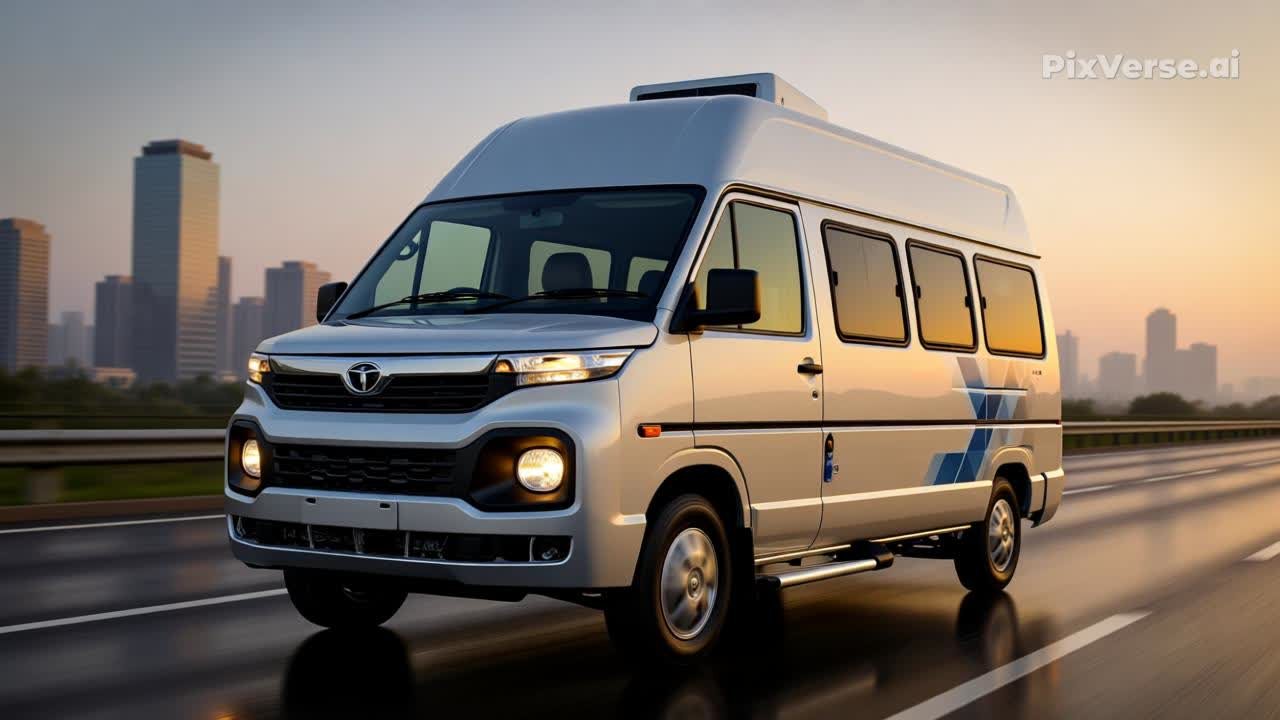
This isn’t just another Winger. This isn’t a minor facelift. This 9-seater, priced at ₹20.60 lakh, is a direct, calculated answer to Rajesh’s 1-star review.
It’s a vehicle that signals a fundamental shift in the tourist vehicle market in India. It’s the sound of a 100-year-old company looking at the market and declaring, “We get it. ‘Good enough’ is officially over.”
This article is for Rajesh. It’s for every travel agency, tour operator, and fleet manager who is tired of that “premium gap.” We’re going to unpack exactly what the Tata Winger Plus is, why it exists, and what it signals for the future of your business.
The “Good Enough” Era is Dead: Why “Premium” is the New Non-Negotiable
For decades, the Indian tourism market ran on two things: volume and reliability.
The king of the road was the body-on-frame van—a tough, truck-based chassis with a van body bolted on top. The primary sales question was, “How many people can it fit?” 12? 15? 20?
The passenger experience was an afterthought.
- Ride Quality? Bumpy. (It’s a truck, what do you expect?)
- Seats? Bench or basic “push-back.” (Cramped.)
- NVH? (Noise, Vibration, and Harshness.) Loud.
And for 20 years, that was fine. Tourists were just happy to get from the airport to the Taj Mahal.
But the world changed. And the Indian tourist changed with it.
- The “Upgrading” Customer: As a recent study on post-GST buying behavior showed, Indian consumers are overwhelmingly “stretching upward.” They aren’t using savings to buy cheaper things; they’re using them to buy premium versions of the same things. They drive a premium SUV at home; they will not accept a “public bus” on vacation.
- The “Experiential” Economy: The journey is now part of the vacation, not just an obstacle. People are filming the drive for their vlogs. They want to be comfortable while they’re moving.
- The Power of the Review: Rajesh’s 1-star review is now permanent. A bad vehicle experience can single-handedly destroy a tour operator’s online reputation.
The market is crying out for a vehicle that is not a compromise. A vehicle that is as comfortable as a car, as profitable as a van, and as serviceable as a Tata.
And that, in a nutshell, is the entire design philosophy of the Winger Plus.
Unpacking the Winger Plus: Is This the “Business Class” of the Highway?
Let’s be clear: this is not your old Winger. Tata has fundamentally re-engineered this vehicle to attack the “premium” market. They’ve focused on the three groups that matter: the Passenger, the Driver, and the Owner.
The Passenger “Wow” Factor (The Features They’ll Write 5-Star Reviews For)
This is what solves Rajesh’s core problem. The Winger Plus is designed around the passenger experience.
- 1. Luxury Captain Seats: This is the #1 upgrade. The 9-seater configuration features fully reclining captain seats with adjustable armrests. This is a massive departure from the “bench-seat” mentality. Every passenger gets their own defined, personal space.
- 2. Real, Personal Air Conditioning: The “Dual AC” isn’t just a sticker. The Winger Plus has individual AC vents for each passenger row. This is the end of the “it’s freezing in the front and an oven in the back” complaint.
- 3. Always-On Connectivity: It’s 2025. A dead phone is a crisis. The Winger Plus has personal USB charging ports for all passengers.
- 4. The “Space” Sensation: Because it’s built differently (more on that in a second), it has high headroom and a wider gangway. It feels open and airy, not like a cramped utility box.
For a passenger, the difference is night and day. This is the experience they thought they were paying for.
The Driver’s Delight (Why Your Staff Will Thank You)
Here’s the technical secret weapon of the Winger Plus, and it’s a game-changer: It has a monocoque chassis.
What does that mean?
- A “Body-on-Frame” vehicle (like an old van or truck) is a heavy steel ladder frame with a body bolted on top. It’s tough, but it’s also rigid, heavy, and has a high floor.
- A “Monocoque” vehicle (like a modern car or premium SUV) has its body and frame as one single, strong shell.
This one engineering choice changes everything for the driver and passengers.
- It Drives Like a Car: The Winger Plus has McPherson Strut front suspension, just like a car. The classic Tempo Traveller, its main rival, uses older, semi-elliptical leaf springs. The difference in ride comfort is staggering.
- Less Driver Fatigue: A car-like driving position, a smoother ride, and lower NVH (noise) means your driver is less tired, more alert, and provides a safer, smoother journey.
- Easy Entry: The monocoque design allows for a lower floor, making it much easier for passengers (especially elderly tourists) to get in and out.
This is a premium travel vehicle that is actually pleasant to drive, not just to endure.
The Owner’s Profit Engine (The TCO Conversation)
This is where it all comes together for Rajesh. The “Wow” factor is great, but a vehicle must be profitable.
Tata, a commercial vehicle giant, has built this vehicle around the Total Cost of Ownership (TCO).
- The Engine: It uses the proven 2.2L DICOR BS6 Phase 2 diesel engine. With 100 HP and 200 Nm of torque, it’s not a race car. It’s an efficiency engine. It’s tuned for “best-in-class fuel efficiency in vans,” which is music to a fleet owner’s ears.
- The Service Network: This is Tata’s trump card. A Force Urbania is premium, but can you get it fixed in rural Rajasthan on a Sunday? A Mercedes Sprinter is a nightmare for parts. A Tata? You can find a service center in every corner of the country. Uptime is profit, and Tata’s network is unbeatable.
- Fleet Edge Telematics: The Winger Plus comes with Tata’s Fleet Edge connected vehicle platform. This is a built-in fleet management solution. You can track your vehicles, monitor driver behavior (harsh braking, speeding), get real-time diagnostics, and manage maintenance schedules, all from your phone. This is a high-end feature, standard.
The Winger Plus isn’t just a vehicle. It’s a complete business asset designed to lower running costs while simultaneously increasing the perceived value of your service.
The Market Signal: What the Winger Plus Launch Really Means
This is bigger than just one van. This launch is a flare in the sky, signaling three major shifts in the tourism vehicle market in India.
Signal 1: The “Premium Economy” Segment is Officially Born
For years, Rajesh had two choices:
- Economy: (Basic vans) – Low cost, low comfort, low customer satisfaction.
- First Class: (Mercedes, Toyota Vellfire) – High cost, high comfort, negative profitability for 90% of tours.
The Tata Winger Plus (along with its rival, the Force Urbania) has just created the “Premium Economy” or “Business Class” segment.
It’s the “Goldilocks” choice:
- Priced for profitability (at ₹20.60 Lakh).
- Comfortable enough to justify a premium price tag to your customers.
- Economical enough to run without destroying your margins.
This is the new battleground.
Signal 2: The War is No Longer “Seats” vs. “Seats”
The old market was a numbers game: “My van has 13 seats. Yours has 12.”
The Winger Plus (9+D) is intentionally smaller than its 13-seater rivals. Tata is making a bet. They are betting that the market has shifted from “How many people can you fit?” to “How happy are the people you fit?”
They are betting that Rajesh can make more profit from 9 happy customers paying a premium, than from 13 unhappy customers haggling for a discount. And they are 100% right.
This isn’t a people-hauler. It’s a luxury van for travel agencies that want to build a brand, not just win a low-bid contract.
Signal 3: The Monocoque vs. Body-on-Frame War is Here
The Winger’s monocoque, car-like chassis is a direct attack on the old way of thinking.
- Body-on-Frame (Old Way): Great for rural, broken roads and heavy-duty abuse. But it compromises everything on ride comfort.
- Monocoque (New Way): Vastly superior ride, handling, safety, and comfort. It’s the standard for 99% of modern passenger vehicles for a reason.
Tata is signaling that India’s highway infrastructure is now good enough that passenger comfort can finally be prioritized over old-school, rugged-for-the-sake-of-it construction.
The Showdown: How Does the Winger Plus Stack Up?
So, Rajesh is interested. But how does this new van actually compare to his other options?
Tata Winger Plus vs. Force Tempo Traveller (The Workhorse)
This is the classic battle.
- Force Traveller: It’s a proven workhorse. Its bigger engine has much more torque (350 Nm vs 200 Nm), and it can be configured with more seats (13+D). If you’re hauling 13 people up a steep mountain pass, the Traveller has the raw power.
- Tata Winger Plus: It’s not as powerful. But it wins on everything related to comfort. The ride quality isn’t just “better”; it’s in a different universe. The interiors, the AC, the low-floor entry… it’s a premium experience vs. a utility one.
- The Analogy: The Traveller is a reliable pickup truck. The Winger Plus is a premium 7-seater SUV. Both can carry people, but only one is a luxury experience.
Tata Winger Plus vs. Force Urbania (The Direct Rival)
This is the real fight. The Urbania was the first to market with this “premium monocoque” idea.
- Force Urbania: It has a “world-class” design (many say Mercedes-inspired), a proven Mercedes-derived engine, and an extremely premium cabin. It’s a fantastic vehicle.
- Tata Winger Plus: It’s Tata’s strategic counter-punch. It matches the premium features (captain seats, AC, USB) and monocoque chassis. But its trump card is the TCO & Service Network.
For Rajesh, this is the deciding factor. The Urbania might be a bit more stylish, but the Tata Winger Plus is the smarter business decision. It’s backed by a service network that ensures his asset is on the road making him money, not in a garage costing him money.
Is the Tata Winger Plus the Right Investment for Your Fleet?
Let’s address the hard questions Rajesh is asking himself.
1. “It’s ₹20.60 Lakh! My old van is still running.” It’s not a cost; it’s an investment. The cost of not upgrading is that 1-star review. It’s losing the corporate contract. This vehicle pays for its premium. By upgrading your fleet, you can immediately upgrade your pricing. You can create a new “Premium Tour” package that corporate clients, boutique hotels, and high-end foreign tourists will exclusively book.
2. “Only 9 seats? I can fit 13 in my Traveller.” This is the “Seats vs. Souls” argument. This 9-seater opens up markets that your 13-seater is locked out of. A high-end corporate client will never book a 13-seater van. They will book a “9-Seater Luxury Captain-Seat Van.” You’re not losing 4 seats; you’re gaining an entirely new, higher-paying customer base.
3. “It’s still a Winger. Is it really premium?” This is not the Winger you remember. The old Winger was a basic utility van. The “Plus” is not a sticker; it’s a new identity. It’s Tata’s passenger car division (the one making the Harrier and Safari) influencing its commercial division. It’s a premium product, full stop.
The Verdict: Your Business Can’t Afford “Good Enough” Anymore
Rajesh is standing at a crossroads. He can buy another “good enough” van and keep fighting for budget-conscious tourists while praying his 1-star reviews don’t sink him.
Or, he can see the launch of the Tata Winger Plus for what it is: a signal.
It’s a signal that the market has changed. It’s a signal that “premium” is now accessible and, more importantly, profitable. It’s a tool, custom-built, to solve his 1-star review problem and give him the confidence to chase the high-value clients he’s been losing.
The “premium gap” is finally closed. The only question is, will you be the first in your market to cross it?
Ready to Upgrade Your Fleet & Your Profits?
Buying a new vehicle is a huge decision. Don’t guess—calculate.
We’ve built a Free TCO & ROI Calculator specifically for tour operators. In just 5 minutes, you can input the cost of the Winger Plus and see exactly how many “premium” trips it will take to pay for itself and start generating real profit for your business.
Stop losing customers to bad reviews. Start building a 5-star fleet.