Advertisement
Introduction – A Family Road Trip That Tells a Bigger Story
It’s a hot summer afternoon.
Priya and her family are driving through Delhi in their trusty gasoline-powered SUV, headed toward their grandparents’ home. The AC is running at full blast, but the city’s dense traffic means the car is crawling forward, spewing invisible tailpipe emissions into the already heavy air.
Priya’s young son coughs lightly in the back seat, and she rolls up the window tighter. She can’t help but notice a sleek electric vehicle silently gliding past them in the next lane. No smoke, no engine rumble—just quiet, clean movement.
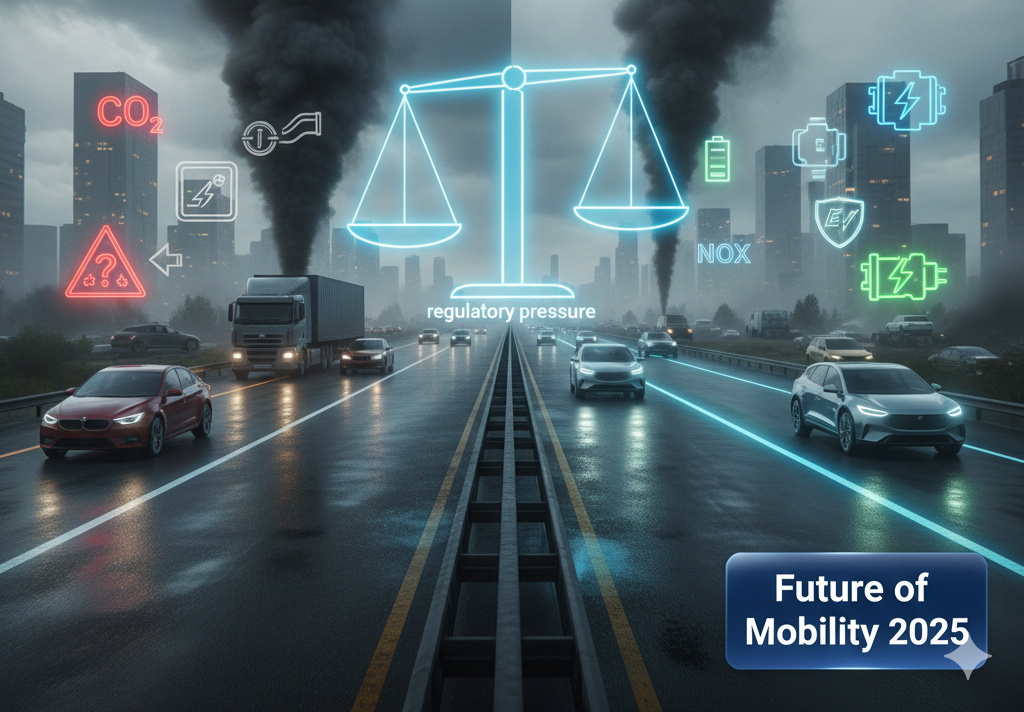
That moment is more than a personal choice of vehicle—it’s the global crossroads we all face today. Governments around the world are tightening tailpipe emissions rules and imposing EV sales mandates to combat climate change, reduce air pollution, and push the auto industry toward a zero-emission future.
But while this regulatory shift promises cleaner skies and healthier communities, it also brings challenges for automakers, car buyers, and even investors.
In this article, we’ll explore:
- What tailpipe emissions rules and EV sales mandates actually mean
- How regulatory pressure is reshaping the automotive industry
- The economic, environmental, and consumer impact of these policies
- Common objections, myths, and real-world answers
- Why this shift is both inevitable and profitable if navigated wisely
What Are Tailpipe Emissions Rules?
At its core, tailpipe emissions regulation is about controlling the harmful gases vehicles release into the air. These include:
- Carbon dioxide (CO₂) – The main driver of climate change.
- Nitrogen oxides (NOx) – Linked to smog and respiratory illnesses.
- Particulate matter (PM2.5 and PM10) – Tiny particles that damage lungs.
- Carbon monoxide (CO) – Harmful in enclosed or poorly ventilated areas.
Governments worldwide are setting strict emission limits per mile or per kilometer. For automakers, this means:
- Redesigning engines to be cleaner.
- Investing in hybrid and electric technology.
- Facing hefty fines if they exceed allowed pollution levels.
It’s no longer just about “building fast cars.” It’s about building compliant, future-proof vehicles.
EV Sales Mandates – Pushing the Market Forward
While emissions rules restrict the old, EV sales mandates encourage the new.
What Is an EV Sales Mandate?
An EV mandate requires automakers to ensure that a certain percentage of their vehicle sales are electric or zero-emission by specific deadlines.
For example:
- California’s ZEV Program – 100% new car sales must be zero-emission by 2035.
- European Union – Ban on new combustion engine cars by 2035.
- China – Aggressive EV quotas, leading to the world’s largest EV market.
- India – Targets for 30% EV adoption by 2030.
These mandates create a push-and-pull dynamic: while tailpipe regulations punish polluting cars, EV mandates reward automakers who innovate.
Why Governments Are Doubling Down on Regulations
The reasoning is simple: climate, health, and economics.
- Climate Change: Transportation accounts for nearly 25% of global greenhouse gas emissions.
- Public Health: Cities like Delhi, Beijing, and Los Angeles struggle with toxic air pollution.
- Energy Security: EVs reduce reliance on imported fossil fuels.
- Industrial Policy: Governments want to stay ahead in the global EV race.
Think of it as governments acting like strict parents—forcing the automotive industry to “eat its vegetables” for long-term health.
The Auto Industry’s Response – Compliance or Collapse
For automakers, compliance is not optional. Failure to meet rules can mean billions in fines.
How Automakers Are Reacting:
- Accelerated EV Investment
- Ford, GM, Volkswagen, and Toyota are investing billions in EV platforms.
- Startups like Rivian, NIO, and Lucid thrive thanks to EV mandates.
- Hybrid Stopgaps
- Many brands release plug-in hybrids (PHEVs) as a bridge toward full EVs.
- Lobbying & Pushback
- Some companies push back, asking for slower timelines.
- Others request subsidies and charging infrastructure to match mandates.
- Global Divergence
- Europe and China are aggressive.
- The U.S. faces political divisions, with states like California leading while others resist.
For automakers, this isn’t just compliance—it’s survival and reinvention.
The Consumer Impact – Car Buyers in Transition
It’s not just automakers feeling the heat—car buyers are directly affected.
What This Means for Consumers:
- Rising Prices: Meeting strict standards costs money, passed down to buyers.
- Fewer Gasoline Options: Some popular models may be discontinued.
- More EV Choices: A flood of electric SUVs, sedans, and trucks entering the market.
- Incentives & Subsidies: Tax credits, rebates, and lower running costs sweeten the deal.
Think of it like the shift from landline phones to smartphones. At first, it felt expensive and unnecessary. Today, no one questions it.
The Investor Angle – Regulatory Pressure as an Opportunity
High CPC keywords like EV investment opportunities, clean energy stocks, green auto industry growth connect directly here.
- EV Stocks Boom: Tesla’s success was largely policy-driven.
- Battery & Charging Investments: Huge growth in infrastructure.
- Legacy Automakers: Those who adapt fast (like Ford and VW) are positioned for long-term wins.
For investors, regulations create predictable demand. The future isn’t just electric—it’s mandated electric.
Common Objections & Honest Answers
1. Isn’t this too fast for the industry?
Yes, timelines are tight. But history shows industries adapt quickly when forced—just like smartphones replaced feature phones within a decade.
2. Won’t this kill jobs?
Some traditional jobs may shrink (engine manufacturing), but new ones rise in batteries, software, and renewable energy.
3. What about charging infrastructure?
This remains a bottleneck. However, governments are investing billions to expand charging networks.
4. Are EVs truly green if electricity comes from coal?
EVs still reduce lifetime emissions. And as grids get cleaner, EV benefits increase further.
The Road Ahead – What the Future Looks Like
The combination of tailpipe emission rules and EV mandates is setting the auto industry on an irreversible course.
- By 2030, EVs could make up over 50% of global sales.
- By 2035, new gas car sales may be banned in many regions.
- By 2050, most transportation could be zero-emission, from cars to trucks to buses.
This is more than policy. It’s a societal transformation—similar to the industrial revolution, but with cleaner air and smarter technology.
FAQs – Tailpipe Rules & EV Mandates
1. Will I still be able to drive my gas car after 2035?
Yes. Bans usually apply to new sales, not existing cars.
2. Are EVs affordable enough yet?
Prices are dropping rapidly, and total cost of ownership (fuel + maintenance) is already cheaper in many regions.
3. What if automakers can’t keep up?
Those who fail to adapt risk fines, loss of market share, or even collapse.
4. Which countries lead in EV regulations?
China, EU nations, and the U.S. (particularly California) are front-runners.
Conclusion – A Turning Point in Automotive History
The world stands at a crossroads.
Tailpipe emissions rules are closing the chapter on polluting cars. EV sales mandates are writing the opening lines of a clean, electrified future.
For automakers, the choice is clear: adapt or be left behind.
For consumers, the opportunity is simple: embrace cleaner, smarter vehicles.
For investors, the signal is loud: the EV revolution is policy-backed, and the momentum is unstoppable.
If you’ve ever wondered whether now is the time to act—whether to buy, invest, or simply prepare—remember Priya’s story. Someday soon, her son won’t be coughing in traffic. He’ll be breathing cleaner air, in a quieter city, riding in a zero-emission world.
👉 Want to stay updated on EV regulations and investment opportunities? Sign up for our free newsletter to get the latest insights on clean mobility and green tech.