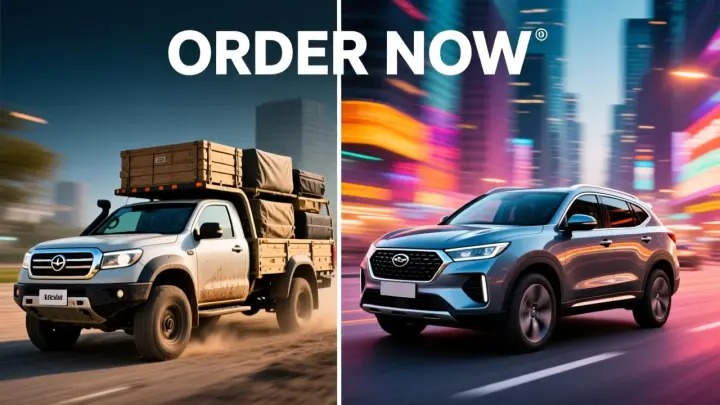
Advertisement
Picture This Scene
Ravi, a courier business owner in Mumbai, sips his morning coffee while staring at his aging delivery van. Every week, fuel prices climb a little higher, maintenance costs seem unavoidable, and he wonders: “Am I really using the right vehicle for my business?”
Across town, Anita, who runs a small catering service, comfortably navigates traffic in her stylish Hyundai Creta, delivering cakes and meals while juggling client calls. She’s often asked by peers, “Wouldn’t a mini-truck be cheaper for deliveries?”
The truth is, both are right for different business needs. And in 2025, choosing the right vehicle isn’t just about cost—it’s about efficiency, comfort, and long-term ROI.
This guide will break down everything you need to know about LCVs/Mini-Trucks and Compact SUVs for small business use, including costs, benefits, real-life scenarios, and actionable tips to make the smartest choice.
Understanding Your Options
What is an LCV / Mini-Truck?
Light Commercial Vehicles (LCVs)—commonly called Mini-Trucks—are small, durable vehicles designed to transport goods efficiently, especially in urban and semi-urban environments.
Key Features:
- High payload capacity for their size, often carrying 500–1,000 kg.
- Compact design for tight city streets and quick deliveries.
- Fuel-efficient engines (diesel or petrol) optimized for stop-and-go traffic.
- Low maintenance costs with simple mechanical systems.
Popular 2025 Models:
- Tata Ace Gold
- Mahindra Jeeto
- Suzuki Super Carry
Best For: Delivery services, florists, construction material transport, logistics startups.
Think of LCVs as the workhorse of your fleet—the kind of reliable employee who doesn’t complain, eats little, and works tirelessly.
What is a Compact SUV?
A Compact SUV is a versatile vehicle that balances passenger comfort with moderate cargo capacity. It’s ideal for small business owners who need a vehicle for both deliveries and client-facing work.
Key Features:
- Comfortable seating for 4–5 passengers.
- Foldable rear seats for cargo flexibility.
- Advanced safety features and better highway handling.
- Stylish design for businesses where brand image matters.
Popular 2025 Models:
- Hyundai Creta
- Kia Seltos
- Tata Nexon EV
Best For: Catering businesses, mobile offices, consultants, and professionals who mix client visits with small deliveries.
Key Considerations for Small Business Owners
Choosing the right vehicle is not just about upfront costs—it’s about efficiency, operational comfort, and profitability. Let’s break down the most important factors.
Payload & Cargo Capacity
If your business involves moving products, payload matters more than aesthetics.
- LCVs / Mini-Trucks:
- Can carry 500–1,000 kg.
- Perfect for bulk deliveries of goods, tools, or raw materials.
- Example: A florist delivering 100 bouquets across the city can fit them efficiently in a Tata Ace without multiple trips.
- Compact SUVs:
- Limited cargo space, typically 300–500 kg.
- Works best for small, lightweight deliveries or a combination of passengers and goods.
- Example: A small bakery delivering 20–30 cakes per trip finds SUVs adequate for short, citywide routes.
Analogy: An LCV is like a heavy-duty backpack, designed to carry bricks, while a Compact SUV is a designer handbag, perfect for essentials and comfort.
Fuel Efficiency & Running Costs
Fuel costs in 2025 are a significant concern. Here’s how both stack up:
- LCVs / Mini-Trucks:
- Diesel variants: 16–20 km/l.
- Excellent for frequent short trips with heavy loads.
- Lower overall fuel costs over the vehicle’s lifecycle.
- Compact SUVs:
- Petrol/hybrid variants: 12–18 km/l.
- Higher fuel consumption under heavy loads, but better for mixed-use trips (passenger + goods).
Pro Tip: Consider total cost of ownership (TCO): fuel, insurance, maintenance, and resale value—not just the purchase price.
Urban Maneuverability vs Highway Comfort
Where you operate is crucial:
- LCVs: Compact, easy to park, great for congested streets and narrow lanes. Ideal for urban logistics.
- Compact SUVs: Excellent highway stability, comfortable long drives, and smooth handling. Better for businesses with frequent out-of-town deliveries or client visits.
Scenario: Ravi, the courier owner, saves 30 minutes daily navigating Mumbai’s narrow streets using his Mini-Truck—time that would be wasted trying to maneuver a bulkier SUV.
Maintenance & Reliability
- LCVs / Mini-Trucks:
- Simple engines, fewer electronics.
- Easier and cheaper repairs, longer durability for high-mileage urban use.
- Compact SUVs:
- Advanced features can mean higher repair and maintenance costs.
- However, longer warranties and better road comfort often offset the expense for business owners.
Tip: Track mileage and service intervals to prevent costly breakdowns—this is especially important for businesses that rely on daily deliveries.
Tax Benefits & Incentives
- LCVs:
- Eligible for commercial vehicle depreciation.
- Can claim tax deductions on fuel, maintenance, and insurance if used exclusively for business.
- Compact SUVs:
- Limited commercial tax advantages unless the vehicle is primarily used for business purposes.
- Hybrid or electric SUVs may qualify for additional incentives in 2025, depending on local regulations.
Pro Tip: Consult a tax advisor to maximize your ROI—sometimes, the right vehicle choice can save thousands annually in taxes.
Case Study 1: Ravi’s Courier Business
Ravi runs a courier service in Mumbai with a Tata Ace Mini-Truck.
- Daily Efficiency: 120 deliveries across dense city routes.
- Fuel Costs: Low due to diesel engine and optimized load.
- Maintenance: Monthly service costs under ₹5,000.
- Outcome: Profits increased by 15% after switching from a larger van to a Mini-Truck.
The compact design allows Ravi to reach congested neighborhoods quickly, making his deliveries on time—a crucial competitive advantage.
Case Study 2: Anita’s Catering Service
Anita operates a catering business in Pune, using a Hyundai Creta.
- Delivery Volume: 20–30 orders per trip, including food packages and catering supplies.
- Comfort & Client Interaction: High, as she often meets clients during deliveries.
- Fuel Costs: Moderate, offset by client satisfaction and business branding.
- Outcome: Business growth of 12% over a year due to timely deliveries and positive customer experience.
The SUV allows Anita to combine cargo transport with professional appearances, which matters in client-facing businesses.
Addressing Common Questions & Objections
Small business owners often hesitate when choosing between an LCV/Mini-Truck and a Compact SUV. Let’s tackle the most common questions head-on.
1. “Is a Compact SUV versatile enough for deliveries?”
Yes—but with limitations. SUVs are best suited for:
- Small to medium-sized cargo.
- Mixed-use operations (passenger + goods).
- Businesses that value image, client interactions, or comfort.
Scenario: A boutique florist delivering arrangements and occasionally attending events finds an SUV sufficient for daily operations, even if it can’t carry large bulk orders.
2. “Isn’t a Mini-Truck outdated?”
Not at all. Modern Mini-Trucks are technologically updated, fuel-efficient, and highly reliable. They’re designed for businesses that require:
- Frequent short trips.
- Heavy cargo in urban environments.
- Low maintenance and running costs.
Pro Tip: Think of Mini-Trucks like “smart workhorses”—they don’t look flashy, but they get the job done efficiently.
3. “What about insurance and resale value?”
- LCVs: Insurance is generally lower than SUVs because of simpler design and commercial classification. Resale may be slower but steady due to consistent demand in logistics and small businesses.
- Compact SUVs: Insurance can be higher due to passenger vehicle classification and electronics. However, SUVs tend to retain value longer, especially well-maintained models with moderate mileage.
4. “What about fuel and running costs?”
- LCVs: Optimized for heavy loads with diesel engines, making them more fuel-efficient over time.
- Compact SUVs: Petrol or hybrid engines offer flexibility and comfort, but running costs can be higher for heavy cargo operations.
Key Insight: Analyze total cost of ownership rather than upfront price. Fuel, insurance, maintenance, and taxes collectively impact profitability.
Decision-Making Framework: Which Vehicle Fits Your Business?
To simplify the choice, consider your business type, cargo requirements, and operating environment.
| Factor | LCV / Mini-Truck | Compact SUV |
|---|---|---|
| Cargo Volume | High | Medium |
| Urban Navigation | Excellent | Moderate |
| Long-Distance Trips | Moderate | Excellent |
| Passenger Comfort | Low | High |
| Maintenance | Low | Moderate-High |
| Fuel Efficiency | High for heavy loads | Moderate |
| Tax Incentives | Strong | Limited |
| Brand Image / Client-Facing | Low | High |
How to Decide:
- Bulk delivery or construction materials → LCV
- Client-facing businesses with occasional deliveries → Compact SUV
- Mixed operations → Consider hybrid solutions or dual-vehicle strategy
Extra Case Studies: Learning from Real Small Business Owners
Case Study 3: Deepak, Electronics Distributor
Deepak runs a small electronics distribution business in Delhi. He initially invested in a Compact SUV to transport gadgets to local retailers.
Challenge:
- He often had bulk orders exceeding the SUV’s cargo capacity.
- Multiple trips increased fuel costs and reduced efficiency.
Solution:
- Switched to a Mahindra Jeeto Mini-Truck.
- Daily deliveries increased by 35%, fuel costs dropped 20%, and customer satisfaction improved due to faster delivery.
Takeaway: For businesses where volume and efficiency matter, LCVs outperform SUVs, even if they’re less stylish.
Case Study 4: Priya, Mobile Consultancy
Priya runs a mobile consultancy business in Bengaluru. Her Compact SUV allows her to:
- Carry client presentation materials.
- Travel comfortably to client sites up to 150 km daily.
- Present a professional image while commuting efficiently.
Outcome:
- Client satisfaction and repeat business increased.
- Operational costs were slightly higher than a Mini-Truck, but her ROI improved due to business growth.
Lesson: Business image and passenger comfort matter as much as cargo capacity in certain service industries.
Maximizing Vehicle ROI: Practical Tips
Even after choosing the right vehicle, maximizing ROI requires strategic planning.
1. Maintenance Hacks
- Follow manufacturer-recommended service intervals.
- Regularly check tires, brakes, and fluid levels to avoid expensive repairs.
- Keep a maintenance log to monitor recurring issues and costs.
2. Insurance Strategies
- Compare multiple insurance providers annually.
- Consider commercial vehicle insurance for LCVs—often cheaper than personal coverage.
- For SUVs, check if hybrid or electric models qualify for incentives or lower premiums.
3. Smart Vehicle Upgrades
- LCVs: Add shelving, cargo dividers, or insulation for specific business needs.
- SUVs: Foldable rear seats, protective liners, or roof storage can increase versatility without compromising comfort.
4. Fuel-Saving Techniques
- Plan routes efficiently to minimize idle time.
- Avoid overloading—extra weight drastically reduces fuel efficiency.
- Use fuel-efficient driving habits: smooth acceleration, consistent speed, and minimal abrupt braking.
The Future of Small Business Vehicles in 2025
With evolving technology and rising urbanization, the vehicle landscape for small businesses is changing:
- Electric and hybrid LCVs: Growing popularity due to low running costs and government incentives.
- Smart compact SUVs: Better fuel efficiency, telematics, and cargo optimization.
- Shared mobility and multi-use vehicles: Businesses may opt for vehicle leasing or subscription models to reduce upfront costs.
Trend Insight: By 2025, small business owners who choose vehicles that maximize efficiency, reduce operating costs, and align with growth strategy will have a competitive edge.
Key Takeaways
- Know your business type and cargo needs: Heavy urban deliveries → LCV; client-facing or light deliveries → SUV.
- Consider total cost of ownership: Fuel, insurance, maintenance, and taxes outweigh upfront costs.
- Urban vs long-distance operations: LCVs excel in congested cities; SUVs shine on highways.
- Think beyond functionality: Client image, comfort, and versatility matter for service-oriented businesses.
- Plan for 2025 trends: Electric, hybrid, and smart vehicle options will shape ROI and efficiency.
Conclusion: Take Action Today
Choosing between an LCV/Mini-Truck and a Compact SUV is more than just picking a vehicle—it’s a strategic business decision. The right choice can reduce costs, improve delivery efficiency, enhance client experience, and even boost profits.
Whether you lean toward the hardworking Mini-Truck or the versatile Compact SUV, make sure the vehicle fits your operational needs and growth plans.
Call to Action:
Take the next step: get a free quote today, compare vehicles, and see which option will help your small business thrive in 2025. Don’t wait—every day your business spends inefficiently is money left on the table.