Advertisement
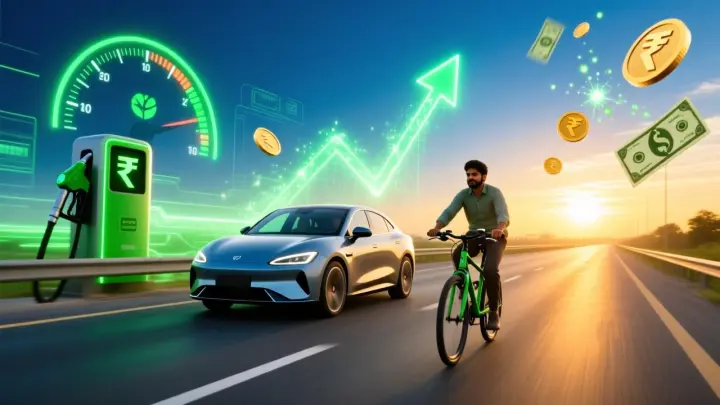
The Day Fuel Prices Broke Ramesh’s Monthly Budget
On a warm Monday morning in Bengaluru, Ramesh stood at the petrol pump staring at the digital meter like it was mocking him.
₹1000… ₹1200… ₹1500… ₹1700…
He sighed heavily.
The weekly top-up for his daily commute had now become more expensive than his family’s entire grocery budget for the week.
Only last year, Ramesh spent around ₹4,500 a month on petrol.
But in 2025, without changing anything in his routine — not his car, not his route, not his working hours — his monthly fuel expense had shot up to ₹7,200.
If you’ve felt that same sting in your wallet, you’re not alone.
Millions of Indians are experiencing the same frustration with rising petrol and diesel prices.
Fuel costs have become unpredictable, and daily commuting has turned into a financial burden.
But here’s the good news:
You can still save a significant amount of money on fuel in 2025—without buying a new car, switching to an EV, or cutting travel.
With smart techniques, simple vehicle-care habits, and awareness of how engines consume fuel, you can cut your petrol or diesel expenses by 20–40%.
This detailed guide reveals 15 proven, science-backed, mechanic-approved ways to save fuel in India in 2025… along with real examples, explanations, and easy-to-follow steps.
Why Are Fuel Prices Rising in India in 2025?
Before learning how to save fuel, it helps to understand why you’re spending more in the first place.
Fuel prices rise due to a mix of unavoidable factors such as:
- Global crude oil fluctuations
- Higher central and state taxes
- Refining and transportation costs
- Rupee’s value against the US dollar
- Global conflicts affecting oil supply
- Increased domestic consumption
- Rising logistical expenses
These factors are beyond your control.
But how efficiently you use fuel — that is something you can control every day.
And that’s where savings start.
1. Drive at the Ideal Speed Range — Your Mileage “Sweet Spot”
Every vehicle has a perfect speed range where it delivers maximum mileage.
For most Indian cars and bikes, this range is 45–65 km/h.
Why this works:
- The engine runs under minimal strain
- Fuel combustion is optimal
- Wind resistance is manageable
- Gear-to-speed ratio is ideal
Think of it like jogging. If you run too fast, you tire quickly. If you walk too slowly, you waste time. The right pace keeps energy steady.
Your engine behaves the same way.
Maintaining a consistent speed can improve fuel efficiency by 15–25% instantly.
2. Maintain Correct Tyre Pressure — The Cheapest Fuel Saver
Ask any mechanic what kills mileage the most silently, and they’ll say:
“Low tyre pressure.”
When tyres are underinflated:
- Rolling resistance increases
- Engine load increases
- Fuel burns faster
Even a 5–10% drop in pressure can reduce mileage dramatically.
How often should you check pressure?
- Every 10 days
- Before long trips
- After major temperature changes
Correct tyre pressure not only boosts mileage but also prevents tyre wear and improves safety.
This simple routine adds up to monthly savings of ₹600–₹1200.
3. Don’t Rest Your Foot on the Clutch — A Common Indian Mistake
If you drive a manual car, this habit might be costing you thousands of rupees every year:
Resting your foot on the clutch pedal.
Even a slight pressure:
- Increases friction
- Reduces power delivery
- Wastes fuel
- Damages the clutch plate
Many people do this unintentionally during:
- Traffic jams
- Signals
- Slow-moving roads
- Hilly climbs
Small change, big savings:
Use neutral when idle. Press the clutch only while shifting gears.
Result?
Mileage improves by 8–10%, and your clutch lasts longer.
4. Use AC Smartly — Comfort Without Wasting Fuel
AC usage can increase fuel consumption by 10–20%, especially in older cars.
But switching off AC completely in Indian summers is unrealistic.
Instead, use the Smart AC Method:
- Keep temperature between 24–26°C
- Use “internal circulation” mode
- Turn off AC while climbing steep slopes
- Don’t open windows above 40 km/h
This reduces fuel wastage while maintaining comfort.
5. Reduce Unnecessary Weight — Every Extra 50kg Wastes Fuel
We often treat our cars like storage rooms.
Open your trunk (or under your scooter seat) and you may find:
- Old bottles
- Tools
- Gym bags
- Unnecessary clothes
- Books
- Work files
- Car accessories you don’t use
Every extra 50 kg reduces mileage by 2–3%.
Declutter your vehicle once a month.
Your mileage will thank you.
6. Stop Unnecessary Idling — Fuel Burns Even When You’re Not Moving
Idling for even 10 minutes a day wastes up to 200–300 ml of fuel.
Multiply that by 30 days, and you lose nearly ₹1000–₹1500 every month.
Best practice:
If your wait exceeds 10 seconds, turn off the engine.
Modern engines are designed to restart without strain. You’re not harming the vehicle; you’re saving money.
7. Regular Engine Servicing — A Dirty Engine Burns More Fuel
Dirty filters, old oil, and clogged spark plugs can reduce mileage by up to 30%.
A well-maintained engine:
- Runs smoother
- Heats less
- Burns fuel efficiently
- Delivers maximum power
Key areas to maintain:
- Air filter
- Engine oil
- Fuel injectors
- Spark plugs
- Throttle body
This is the most reliable long-term mileage booster.
8. Plan Routes Smartly — Avoid Jams, Bad Roads & Wasted Fuel
In 2025, navigation apps are smarter than ever.
Apps like:
- Google Maps
- Waze
- MapMyIndia
offer real-time updates for:
- Traffic congestion
- Road closures
- Accidents
- Road quality
- Weather impact
Avoiding just 15–20 minutes of traffic every day saves ₹1500–₹2000 a month.
9. Use Cruise Control on Highways — Consistent Speed = Better Mileage
If your car has cruise control, use it on highways.
It prevents:
- Sudden acceleration
- Sudden braking
- RPM fluctuations
The result is an immediate 2–5 km/l mileage improvement.
10. Refuel During Early Morning or Late Night — Temperature Advantage
Fuel expands slightly when hot.
In cooler hours (early morning or late night), fuel is denser, which means:
- You get slightly more volume
- Fuel evaporates less
- Mileage improves subtly
The difference isn’t huge, but over time it adds up to consistent savings.
11. Avoid Premium Petrol/Diesel — Most Vehicles Don’t Need It
Unless your manufacturer recommends premium fuel, using it is unnecessary.
Premium fuel often:
- Doesn’t increase mileage
- Doesn’t improve performance
- Doesn’t protect the engine better
Regular fuel is perfectly fine for most vehicles on Indian roads.
This simple switch saves hundreds of rupees monthly.
12. Use the Correct Engine Oil Grade — Wrong Oil Means Extra Fuel Burn
Using the wrong engine oil increases friction.
More friction = more fuel consumption.
Always follow the oil grade recommended by your manufacturer.
Using synthetic oil can improve fuel efficiency by 4–7%.
13. Avoid Filling Fuel When the Petrol Pump Tank is Low
When the underground tank at a petrol pump is nearly empty, it pulls:
- Dirt
- Rust
- Impurities
These go straight into your vehicle’s fuel system.
Signs the pump tank might be low:
- No crowd
- Unusual waiting time
- Frequent tanker arrival
Best time to refuel:
- After the pump has been refilled
- During busy hours
- Early morning
Cleaner fuel = better combustion = higher mileage.
14. Avoid Sudden Braking & Rapid Acceleration — Drive Smoothly
Harsh driving can increase fuel consumption by up to 40%.
Every sudden acceleration floods the engine with fuel.
Every sudden brake wastes momentum.
Smooth driving keeps your mileage steady and predictable.
15. Carpooling, Ride-Sharing & Partial EV Usage — The Big Savings
Small habits save money.
But certain lifestyle changes save the most.
You can save thousands every month by:
- Carpooling with colleagues
- Using ride-sharing apps occasionally
- Using a bike for short trips
- Using public transport selectively
- Starting to shift towards hybrids or EVs
When Ramesh finally tried carpooling 3 days a week, his monthly bill dropped from:
₹7200 → ₹4200.
It completely changed his budget.
Just imagine this for a moment: if you follow even half of these fuel-saving practices, you could easily save ₹800–₹1500 every single month without changing anything major in your lifestyle. And if you stack multiple strategies, the results become even more impressive.
But beyond the practical tips, there’s something even more interesting happening in India right now—new technologies, smarter apps, and better vehicle features are making fuel efficiency easier than ever. That’s why knowing how to use them correctly is the real secret weapon of 2025.
Let’s go deeper into the remaining smart ways to cut down on petrol and diesel expenses.
Smart Fuel Apps Every Indian Driver Should Use in 2025
In the past, you would simply walk into any random petrol pump and get your tank filled. But now?
2025 is digital. And fuel savings are just a few taps away.
Apps like HP Pay, Shell App, Jio-bp Pulse, and IndianOil’s Fuel@IOC are offering cashback, loyalty points, and exclusive discounts. Many people don’t realize this, but using these apps regularly can put real money back into your pocket.
Here’s how they help:
• They show nearby fuel stations with accurate updated prices
• They offer cashback and reward points
• They calculate mileage and track fuel usage
• They remind you when your vehicle’s service is due
• They help identify fuel-efficient driving patterns
Think of them as the FitBit for your car—keeping track of every drop of fuel.
And here’s the fun part: some digital wallets like Paytm, PhonePe, and Amazon Pay frequently run fuel cashback campaigns. If you refuel with digital payments consistently, your everyday expenses drop automatically.
Fuel Loyalty Programs That Actually Work
A lot of people don’t bother signing up for loyalty programs, thinking, “What difference will it make?”
But believe it or not, heavy commuters—delivery drivers, sales people, Uber/Ola drivers—save thousands every year through them.
Programs like:
• IndianOil XTRAREWARDS
• HPCL’s DriveTrack Plus
• BPCL’s PetroCard
These programs reward you for every litre you purchase. The more you refuel, the more points convert into discounts.
Imagine earning ₹200–₹500 cashback every month for simply doing what you already do—refilling your tank.
Small habit. Big savings.
Fuel-Saving Gadgets Worth Trying in 2025
The Indian market is full of small devices that claim to boost mileage. Many are useless. But some actually work when used correctly.
Here are a few worth considering:
• Tyre pressure monitoring systems (TPMS)
• OBD2 scanners for tracking mileage and engine efficiency
• Fuel-additive cleaners for older vehicles
• Dash-mounted eco-driving assistants
These gadgets don’t magically double your mileage, but they help you drive smarter. Even a 5–8% improvement in fuel efficiency can save thousands annually.
Use Navigation Wisely to Avoid Fuel Drain
Most drivers think Google Maps is just for directions. But in 2025, maps have become AI-powered fuel-saving tools.
They now show:
• Traffic density
• Road quality
• Real-time fuel-efficient routes
• Shortest-time vs. shortest-distance comparison
• High-traffic zones during peak hours
Studies show that avoiding just 10 minutes of daily traffic can save ₹300–₹500 of fuel per month.
So the next time Maps suggests an alternative route that seems slightly longer—accept it. It may save more fuel than you think.
Avoid Idling, Especially at Traffic Signals
Idling is one of the biggest “silent killers” of mileage.
Most Indians leave their engine running during:
• Long traffic signals
• Waiting outside shops
• Picking up someone
• Parking lot delays
But did you know your engine burns almost the same amount of fuel idling for 10 minutes as it does driving 5 km?
Switching off for anything longer than 20–25 seconds is always worth it.
Modern cars and bikes restart safely without consuming excess fuel—that’s why auto start-stop technology exists.
If vehicles with expensive engines can do it, so can your daily commuter.
Upgrade to Better Engine Oil for Increased Mileage
Engine oil isn’t just lubricant—it is your engine’s life force.
Cheap oil creates friction.
Premium oil reduces resistance.
Reduced resistance = better mileage.
In 2025, many car manufacturers recommend synthetic or semi-synthetic oils. These oils:
• Keep your engine cooler
• Improve power delivery
• Reduce fuel burn
• Extend engine life
Even if premium oil costs slightly more, the long-term savings on fuel and maintenance make it worth every rupee.
Aerodynamics—The Factor Most Drivers Ignore
It sounds a bit technical, but aerodynamics simply means how easily your vehicle moves through air.
Most fuel wastage happens after 60–70 km/h because air drag increases dramatically.
You can improve aerodynamics by:
• Keeping windows closed at high speeds
• Removing roof racks when not in use
• Avoiding oversized wheel covers
• Keeping side mirrors folded when possible (in safe conditions)
Small adjustments… but noticeable mileage difference.
Plan Multi-Purpose Trips Rather Than Multiple Small Trips
Cold engines eat more fuel.
That’s why short rides—like dropping kids, going to a shop, and returning home—burn more petrol than a longer combined trip.
Here’s a simple example:
Instead of making three 2 km trips, plan one 6 km combined route.
Same distance.
Less fuel burned.
Less wear and tear.
More time saved.
Maintain a Clean Fuel System
Over time, carbon deposits accumulate inside the fuel injector, throttle body, and valves.
This reduces engine efficiency and increases petrol and diesel consumption.
A simple injector cleaning service every 10,000–15,000 km can help restore:
• Better pickup
• Smoother engine performance
• Lower fuel consumption
• Higher mileage
Consider it a spa treatment for your engine.
Drive in the Right Gear at the Right Time
Driving habits make or break mileage.
Here’s a simple rule to remember:
• Lower gear = more fuel
• Higher gear = fuel savings
Many drivers accelerate too much in low gear, wasting fuel.
Ideal practice:
• Shift to higher gears early (without overloading the engine)
• Avoid sudden downshifts
• Maintain steady RPMs
• Let momentum work for you
Smooth and predictable driving is fuel-efficient driving.
Use Cruise Control on Highways
If your car has cruise control, use it.
Cruise control keeps your speed constant, eliminating unnecessary acceleration.
It’s especially helpful on:
• Expressways
• Long highways
• Early morning or late-night drives
Many drivers report 5–10% better mileage with consistent cruise control usage.
Avoid Overfilling the Fuel Tank
People often ask the pump guy: “Bhaiyya, thoda aur bhar do.”
But overfilling causes:
• Fuel evaporation
• Fuel wastage
• Damage to the vapor recovery system
• Lower mileage
Always fill only up to the auto-cut point for maximum efficiency.
Consider Switching to CNG, Hybrid, or Electric Vehicles
This is not a quick fix, but a long-term fuel cost solution.
CNG vehicles cost far less per km.
Hybrids deliver the best mileage.
EVs eliminate fuel costs entirely.
If your yearly driving is high, switching to a more efficient vehicle may save you lakhs over 5–10 years.
Fuel costs are not going down anytime soon—planning smart today means saving big tomorrow.
Future-Proof Your Costs With These Additional Tips
• Use ride-sharing when possible
• Avoid peak-hour traffic
• Telecommute or work from home when allowed
• Keep separate budget tracking for fuel expenses
• Take advantage of festive fuel cashback offers
• Use a dedicated fuel credit card for maximum savings
Savings don’t come from one big change—they come from small, consistent habits.
Final Thoughts: Your Fuel-Saving Future Starts Today
Here’s the truth—fuel prices in India may never go back to what they were.
But your fuel expenses don’t have to increase.
By applying even a few of these scientifically proven, real-world strategies, you could reduce your petrol and diesel costs drastically.
You’ve now mastered 15+ powerful methods to save money on fuel in 2025.
Your next step?
Start with just 3 habits today.
Within a week, you’ll feel the difference.
Within a month, you’ll see the savings.
Within a year… you’ll be shocked at how much money you kept in your pocket.
If you want more money-saving tips, exclusive hacks, and deep-dive guides like this, make sure to follow and stay updated.
Saving fuel is not just about driving smarter—it’s about living smarter.