Advertisement
Let’s talk about Amit.
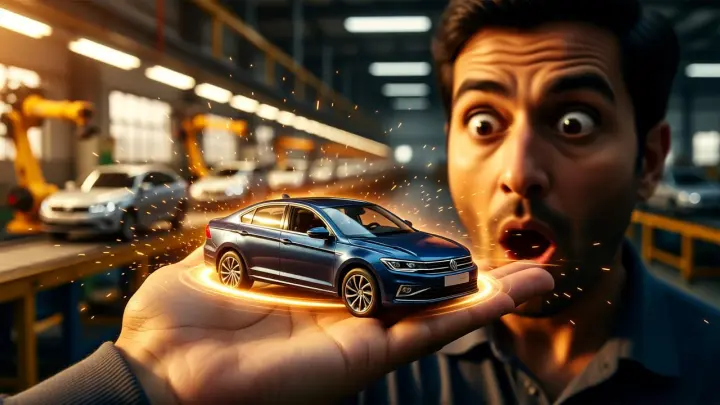
Amit is a 34-year-old project manager in Pune. He just got a big promotion, and after years of driving a faithful hatchback, it’s time for a “proper” family car.
He loves cars. His desktop wallpaper is a race car. He grew up in the back of his dad’s sedan, loving the low-slung, planted feel.
But in 2025, his car-buying journey is a nightmare.
His wife, Meera, is practical. “Amit, we need an SUV. The roads in the monsoon are a joke. Look at the potholes. We need high ground clearance.”
His friends are no help. “Bhai, just get a Creta,” one says. “No, the Seltos has more features,” says another. “Get the Taigun,” says his (annoyingly logical) brother.
The entire world is screaming “SUV!”
Amit is depressed. He tests drives a few. They’re fine. They’re tall, practical… and feel, to him, like driving a small, wallowy bus. The “fun-to-drive” part of his brain is fast asleep. The sedan, he thinks, is dead.
He’s almost ready to sign the cheque for a compact SUV he doesn’t love.
Then, on a whim, he walks into a Volkswagen showroom. He sees the Volkswagen Virtus. He sees the “GT” badge. The salesperson, seeing his interest, says, “Sir, this has 179mm of ground clearance… almost the same as those SUVs. And a 5-star GNCAP safety rating.”
Amit’s heart skips a beat. He opens the boot. It’s… cavernous. 521 liters.
“Okay,” he thinks. “But how does it drive?”
Ten minutes later, on an open stretch of road, he flooring the 1.5L TSI engine. The DSG gearbox cracks off a perfect, instant shift. He’s pushed back into his (ventilated) seat. He’s not just driving; he’s grinning.
Amit just discovered the secret: The sedan isn’t dead. It was just waiting to be reborn.
This isn’t just Amit’s story. It’s the story of how the Volkswagen Virtus, against all odds, in the middle of an “SUV-pocalypse,” became India’s #1 premium sedan.
How did VW pull off this magic trick? It wasn’t one thing. It was a perfectly executed, five-part strategy.
The “SUV-pocalypse”: The Impossible Market VW Entered
First, let’s set the stage. A few years ago, the Indian sedan market was on life support.
- SUVs were King: The Hyundai Creta, Kia Seltos, and Tata Nexon were dominating sales. They offered the magic combo: high ground clearance for bad roads, a commanding “king of the road” seating position, and “big car” presence.
- Sedans Were “Dead”: They were seen as impractical. “Too low” for potholes. “Hard to get in and out of.” “Boring dad cars.”
- The Old Guard Was Tired: The legendary Honda City and Hyundai Verna were still fighting, but their sales were slipping. VW’s own Vento was ancient.
The entire premium mid-size sedan segment was shrinking. In the first seven months of 2025, the segment shrank by a painful 12%.
Into this bloodbath, Volkswagen launched the India 2.0 project—a multi-billion-dollar gamble to build cars for India, in India. The Virtus wasn’t just a new car; it was the flag-bearer for VW’s entire sedan “rescue mission.”
It seemed like madness. But VW had a plan.
Pillar 1: The “Un-Sedan” Design (Solving the SUV Problem)
VW’s engineers knew they couldn’t just launch another low-slung sedan. They had to beat the SUVs at their own game.
The brief must have been: “Make it a sedan, but make it an SUV.”
And they did.
The Ground Clearance Miracle
The Virtus’s secret weapon is 179mm of ground clearance.
Let’s put that in perspective:
- Honda City: 165mm
- Hyundai Verna: 165mm
The Virtus stands taller. It’s not just a number; it’s a feeling. It’s the confidence to tackle a water-logged underpass or a broken rural road without wincing. It directly solved Meera’s (and half of India’s) biggest objection.
Sheer, Undeniable Presence
The second problem with old sedans? They looked small next to SUVs.
The Virtus is a beast.
- It’s the longest car in its class (4,561mm).
- It has the longest wheelbase (shared with its sibling, the Skoda Slavia).
It looks like a baby Jetta, or even an Audi A4 from a distance. It has a “big car” presence that commands respect. When Amit pulls up in his Virtus, he doesn’t feel smaller than his friend’s Creta. He feels more premium.
The Cavern of a Boot
“But what about luggage?” says the SUV buyer. “We need space!”
The Virtus has 521 liters of boot space.
That is, to be blunt, massive. It’s bigger than the boot of a Tata Nexon, a Kia Seltos, or a Hyundai Creta. It will swallow a family’s luggage for a two-week vacation and ask for more.
The Virtus “Un-Sedan” was complete. It had the ground clearance, the road presence, and the boot space of an SUV, but with the body of a sleek European sedan.
Pillar 2: The “Heart of a B*east” (The Performance That Killed “Boring”)
For decades, the “premium sedan” was synonymous with “reliable but boring.” You got a smooth, naturally-aspirated engine that was… fine.
VW didn’t just walk into this fight. It came in with a turbocharged uppercut.
They used a brilliant two-engine strategy to capture both the sensible buyer and the enthusiast.
The 1.0 TSI: The Smart, Sensible Hero (Dynamic Line)
This is the engine that 80% of buyers choose, and it’s a masterpiece. The 1.0-liter TSI (115 PS / 178 Nm) is a tiny, 3-cylinder engine that thinks it’s a big 4-cylinder. It’s peppy, eager, and fantastic in the city.
But the real genius? The gearbox.
VW knew Indian buyers were terrified of the “DSG reliability” in stop-and-go traffic. So, for the 1.0 TSI automatic, they used a 6-speed Torque Converter (TC).
Think of it this way: The TC is a proven, battle-hardened, ultra-reliable automatic. It’s smooth, durable, and perfect for the bumper-to-bumper crawl of Mumbai or Bangalore. This single choice erased a decade of reliability fears for the mass-market buyer.
The 1.5 TSI & DSG: The “GT” Halo (Performance Line)
This is the engine that got Amit to grin. The Virtus GT with its 1.5-liter TSI EVO engine (150 PS / 250 Nm) is the “enthusiast’s choice.”
This is the “heart.”
- It’s a 4-cylinder rocket that makes the Virtus a true “sleeper car.”
- It’s paired with the legendary 7-speed DSG (dual-clutch) gearbox. For the enthusiast, this is heaven. The shifts are instant.
- It has Active Cylinder Technology (ACT), which cleverly shuts off two cylinders when you’re cruising on the highway. The bizarre (and wonderful) result? The more powerful 1.5L engine can often give better highway mileage than the 1.0L!
Volkswagen set a trap. The 1.0 TSI (with its TC) caught the sensible buyers. The 1.5 GT (with its DSG) caught the enthusiasts. And the “GT” badge created a “halo effect”—it made the entire Virtus line feel fast and special.
Pillar 3: The “Built Like a Tank” Promise (The Safety Offensive)
This is the pillar that turned the Virtus from a “contender” to a “leader.”
For years, “German build quality” was a feeling. You’d shut the door and hear that solid “thunk.” But VW knew, in 2025, feelings weren’t enough. They needed proof.
And they delivered.
The Volkswagen Virtus was sent to the Global NCAP (New Car Assessment Programme) for testing under their new, tougher protocols. The results were a bombshell:
- 5-Star Rating for Adult Occupant Protection
- 5-Star Rating for Child Occupant Protection
This was a perfect score. It became, overnight, one of the safest cars made in India.
It wasn’t just the 6 standard airbags, the ESC (Electronic Stability Control), or the 40+ safety features. It was the core of the car—the MQB A0 IN platform—that was proven to be a fortress.
When the old king, the Honda City (with its older 4-star rating), and the new Hyundai Verna (which also scored 5 stars, but slightly later) were put to the test, the Virtus was already wearing the crown.
For families, this was the tie-breaker. You could have German performance, SUV-like practicality, and the best-in-class safety? The sale was closed.
Pillar 4: The Price and Service “Myth-Busting”
VW had one final, giant enemy to slay: its own reputation.
For 15 years, every Indian car buyer “knew” two things about VW:
- They are expensive to buy.
- They are ruinously expensive to service.
The India 2.0 project was designed to kill these myths.
Handling the “Volkswagen Service Cost” Objection
Thanks to 95% localisation (building the parts in India), the cost of ownership plummeted.
- 4EVER Care: VW launched the Virtus with a standard 4-year/100,000 km warranty, 4 years of Roadside Assistance, and 3 free services. This was a massive statement of confidence.
- Transparent Pricing: VW has published maintenance costs, with some estimates putting the 5-year service cost around ₹27,000 – ₹29,000. This is not “cheap,” but it’s incredibly competitive and often cheaper than its Japanese and Korean rivals.
- Reduced Part Costs: VW advertised up to an 18% reduction in maintenance costs.
They didn’t just say it was affordable; they put it in writing and backed it with the best standard warranty in its class.
The Verdict: The Numbers Don’t Lie
So, did this 4-pillar strategy work?
Let’s look at the sales figures from January to July 2025. In a segment that shrank by 12%, here’s how the heavy-hitters performed:
- Volkswagen Virtus: 12,455 units (The only car in the top 5 to show growth over the previous year)
- Skoda Slavia: 7,901 units
- Hyundai Verna: 7,622 units (A staggering 33% drop)
- Honda City: 5,076 units (A painful 29% drop)
The Virtus isn’t just winning. It’s dominating. It accounts for 33% of all sedans sold in its class.
It beat the King (City) and the new Challenger (Verna) by not acting like them.
The Virtus won by redefining the sedan.
It’s a sedan with the soul of an SUV (179mm ground clearance, 521L boot). It’s a sedan with the heart of a hot-hatch (the Virtus GT 1.5 TSI). It’s a sedan with the reliability of a workhorse (the 1.0 TSI + TC). And it’s a sedan with the safety of a 5-star vault (GNCAP 5-Star).
It’s the car for Amit. The car for the person who wants everything—the fun, the safety, the practicality, and the premium feel.
The Virtus didn’t just enter the market. It created its own. And that is why it’s India’s new premium sedan leader.
Don’t Just Read About It. Feel It.
You can read 4,000 words about the Virtus GT, but you won’t understand the grin until you feel the pull of that 1.5L TSI engine and the snap of the DSG gearbox.
Reading about a 5-star safety rating is reassuring. Sitting inside a car that feels like it’s carved from a single piece of steel is another.
Your “Amit” moment is waiting.